
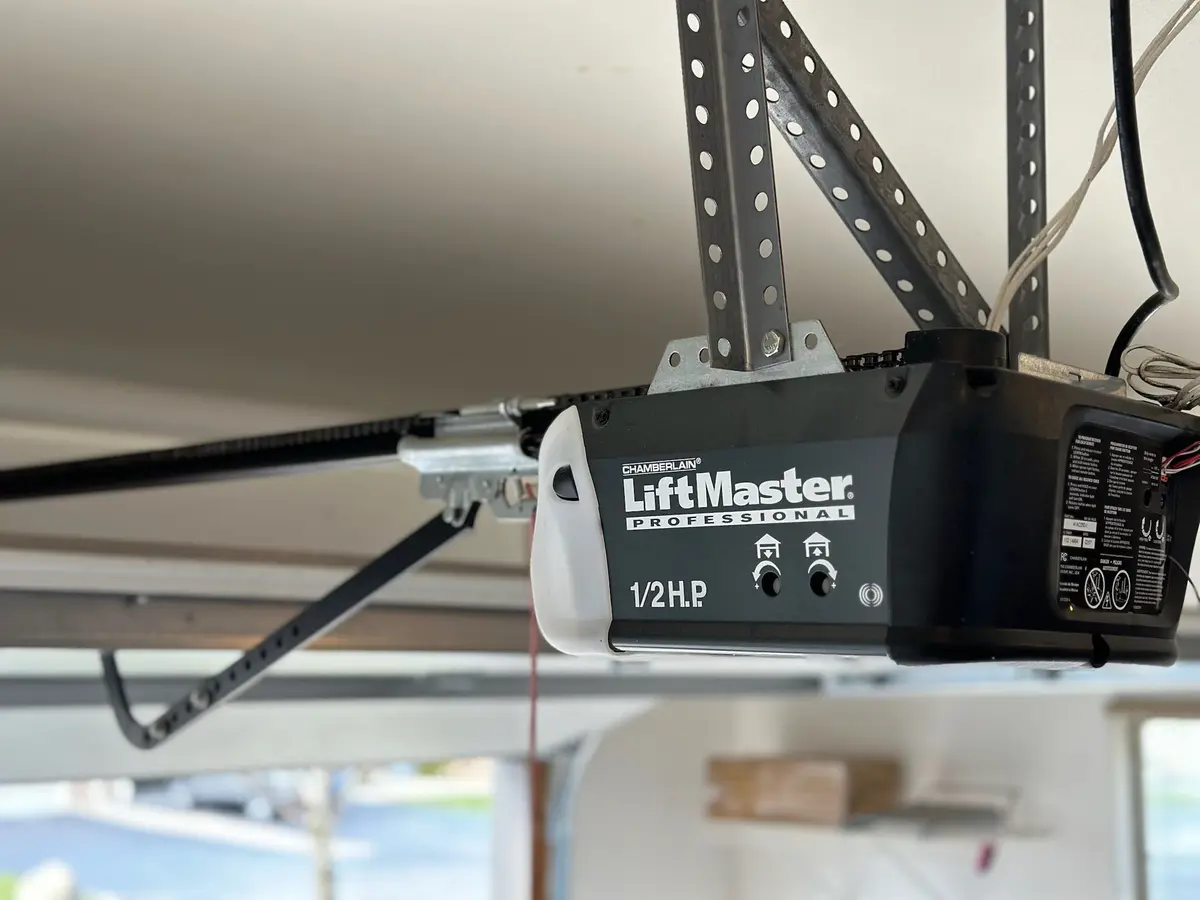
Belt and chain openers work the same way: a motor pulls a trolley along a rail, and the trolley moves the door. The difference is what connects the motor to the trolley, and that affects noise more than anything else.
Belt drive
A steel reinforced rubber belt runs along the rail. With no metal on metal contact, belt drives are the quietest openers available. They cost somewhat more than an equivalent chain model.
Best for: attached garages, and any garage with a bedroom or living space above or beside it.
Chain drive
A metal chain, similar to a bicycle chain, does the pulling. Chain drives are strong, proven and usually the least expensive. They are louder, and the chain needs occasional lubrication and tension adjustment.
Best for: detached garages, and attached garages where noise is not a concern.
What about wall mount openers?
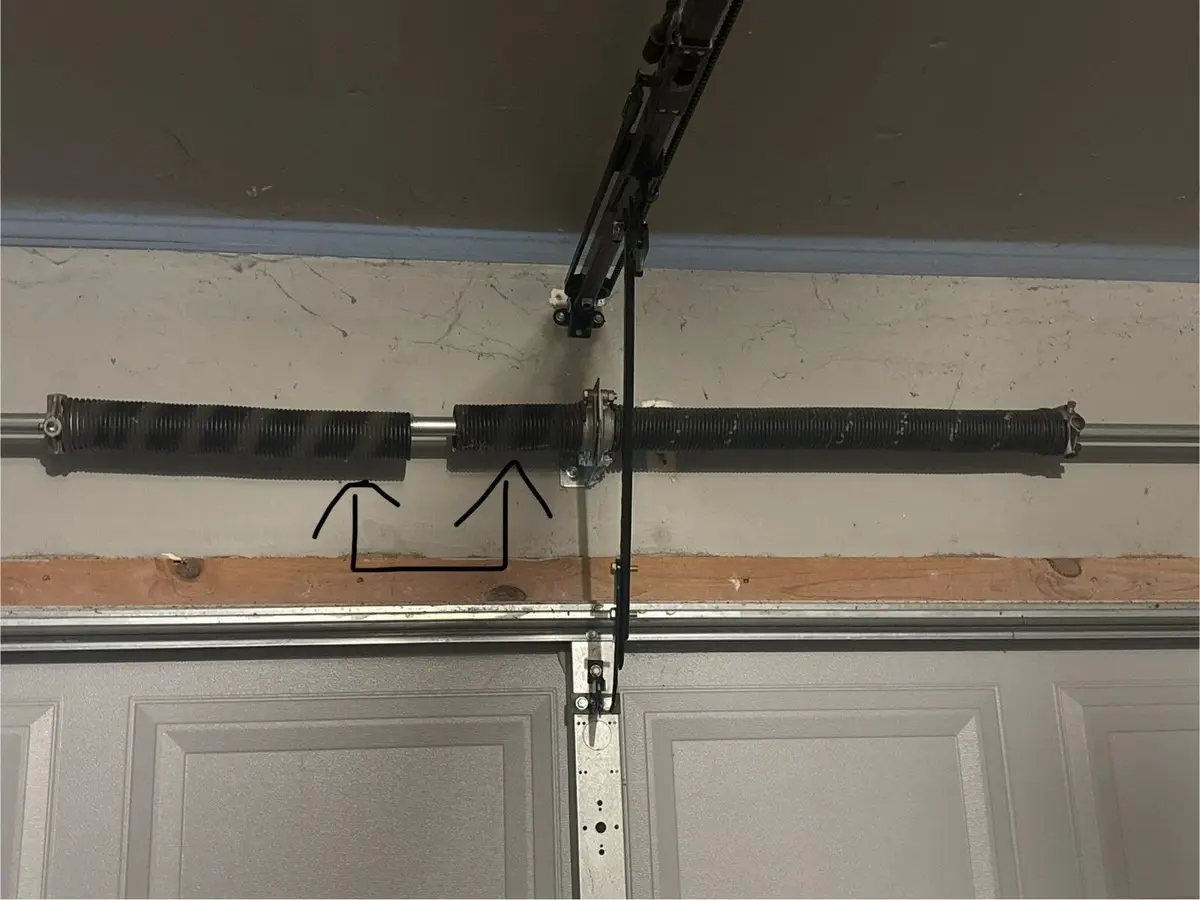
A wall mount, or jackshaft, opener sits beside the door and turns the spring shaft directly, with no rail overhead. It is very quiet, frees the ceiling for storage, and suits high or sloped ceilings. It requires a torsion spring system.
Does motor power matter?
Less than most people think. The springs lift the door; the opener only guides it. A balanced standard double door runs comfortably on a mid-range motor. Heavier wood, glass or oversized doors need more. An opener that struggles on a normal door points to a spring problem, not an undersized motor.
Our recommendation
For most attached garages in the Austin area, a belt drive with battery backup and built-in Wi-Fi is the best all round choice. See opener installation for what is included.