
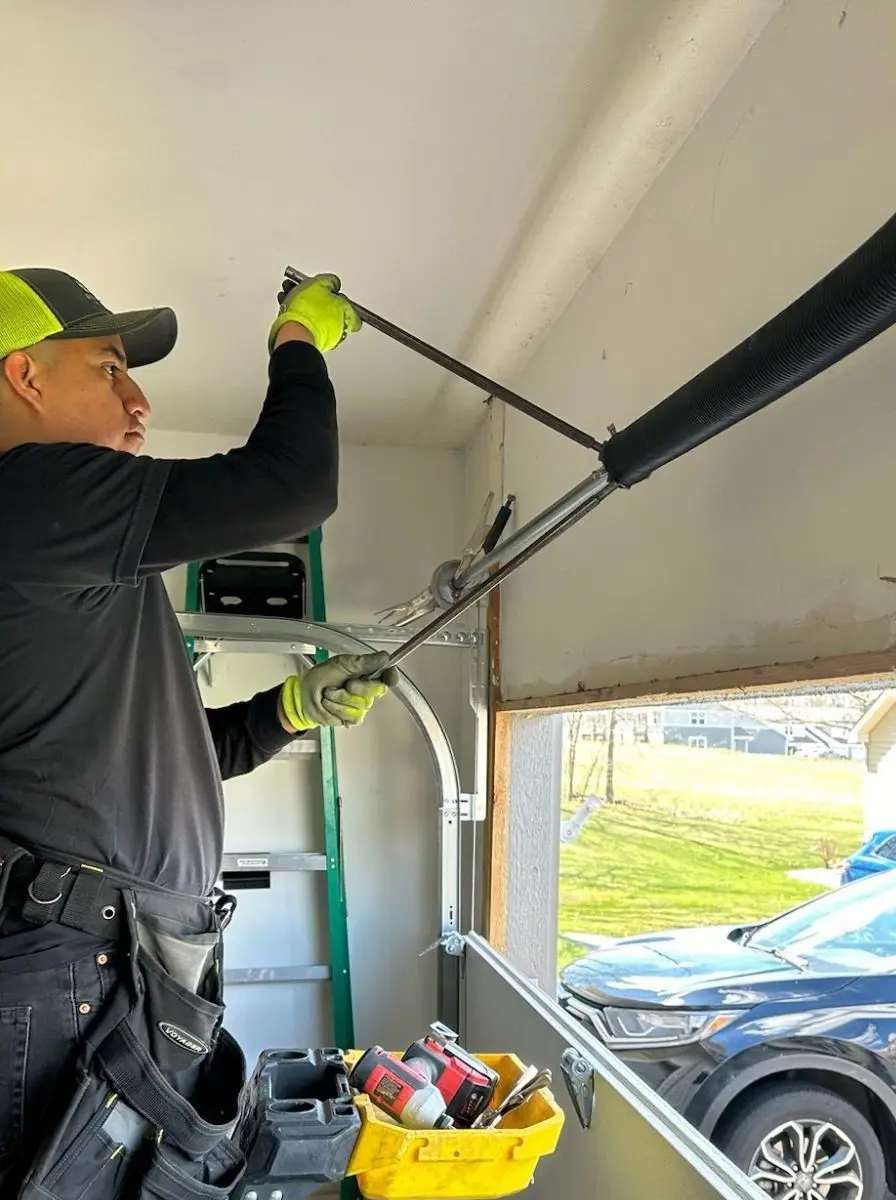
Signs of a broken spring
- A loud bang from the garage, like something heavy fell
- A visible gap of an inch or two in the coil above the door
- The opener strains and lifts the door only a few inches
- The door feels extremely heavy when lifted by hand
- The door closes much faster than normal
- Cables are loose or have slipped off the drums
Real examples from our jobs
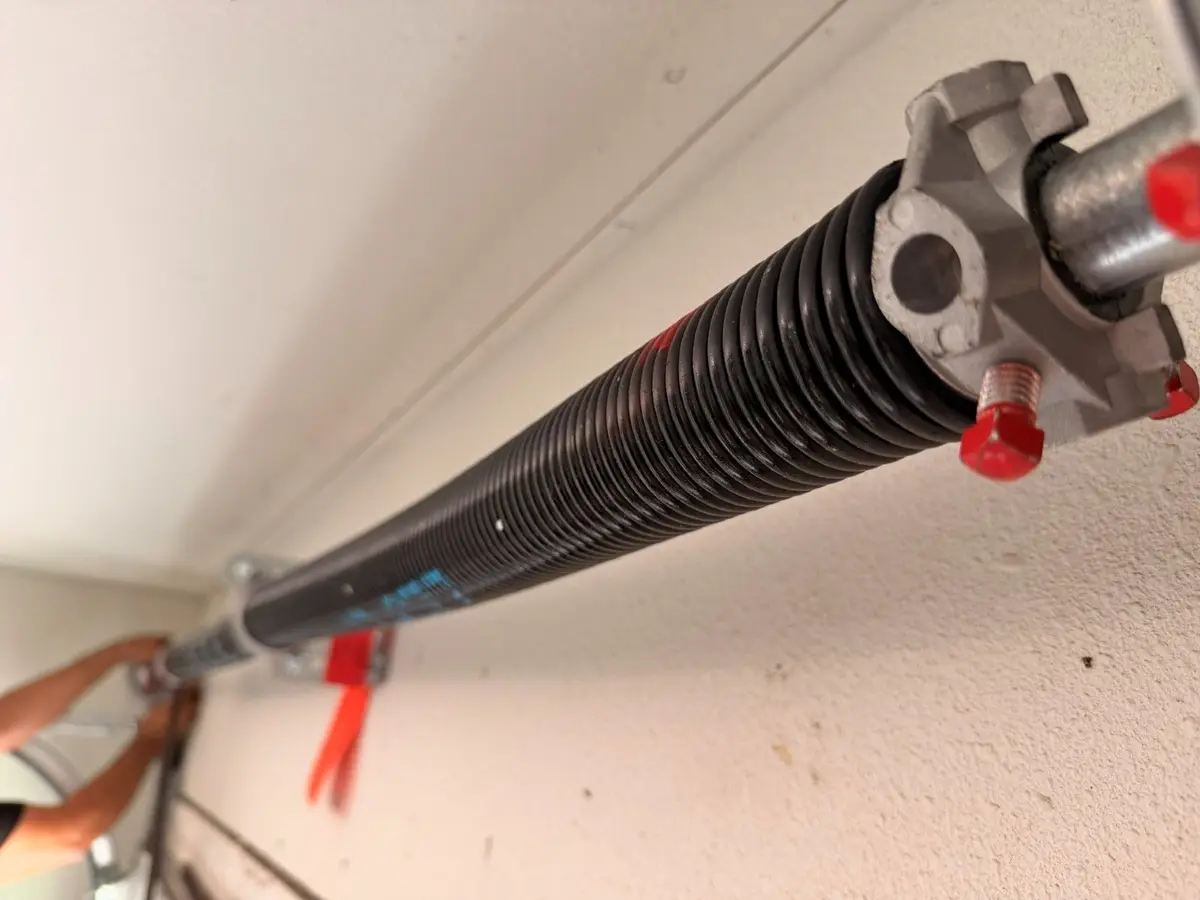
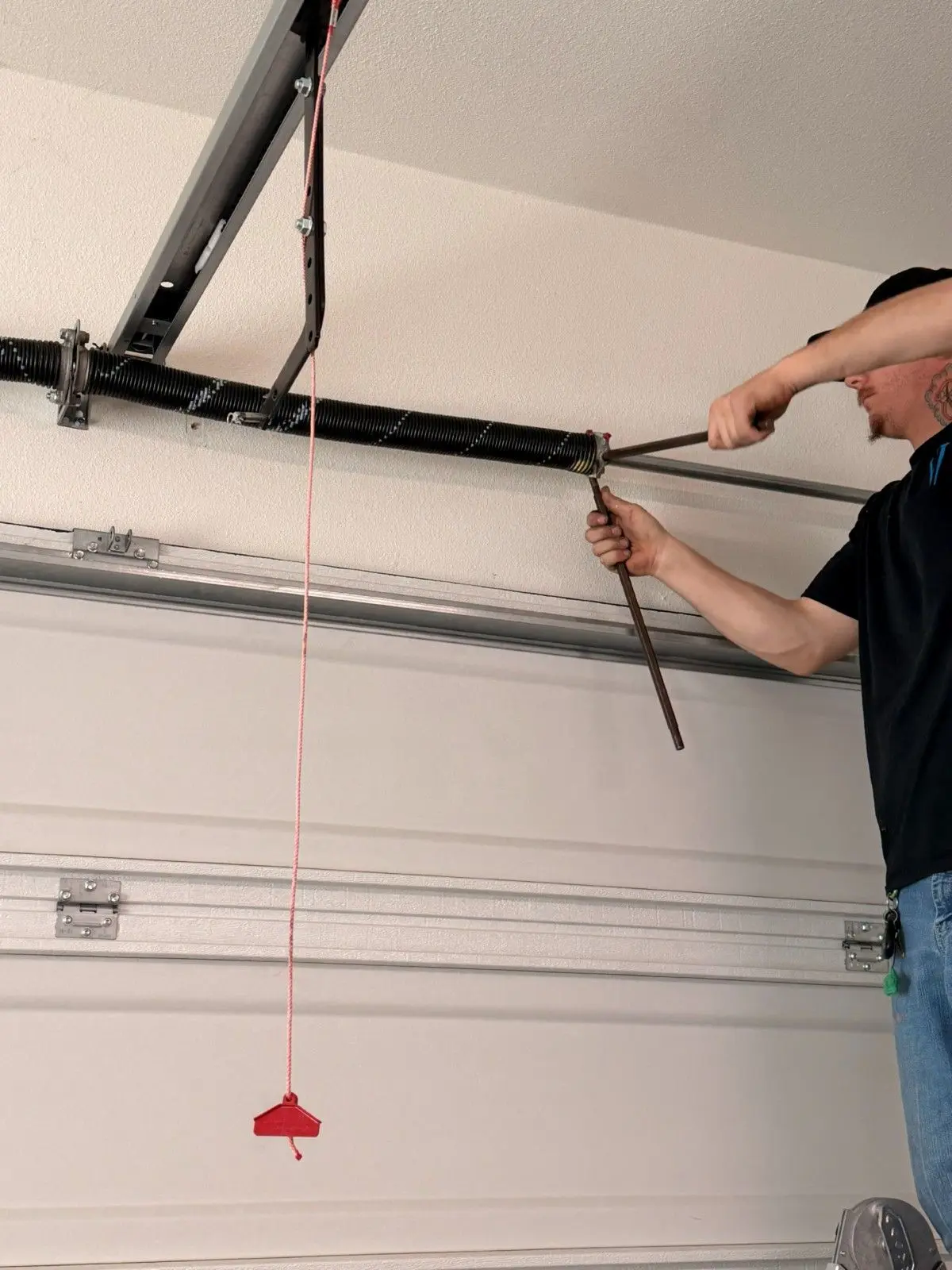
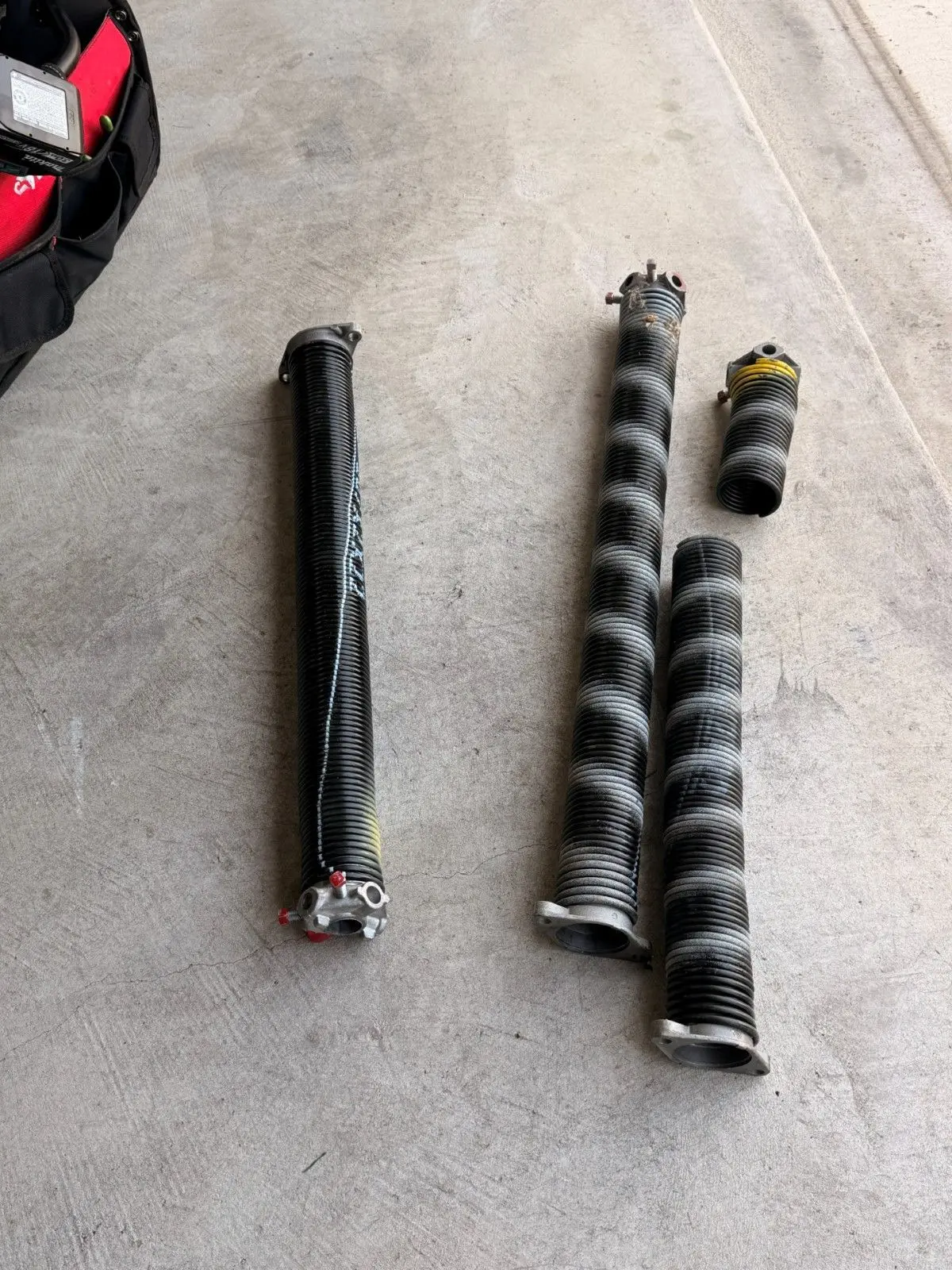
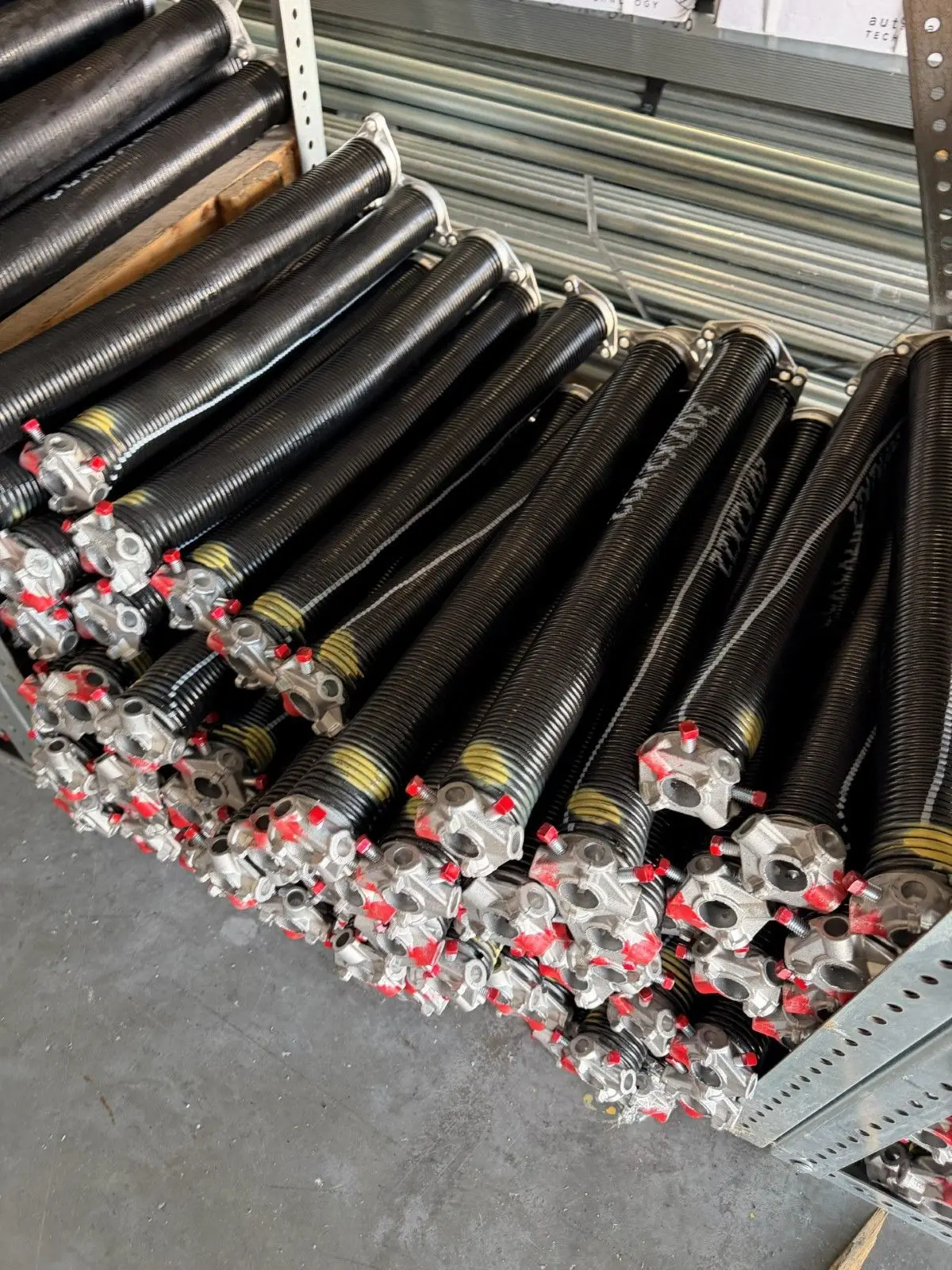
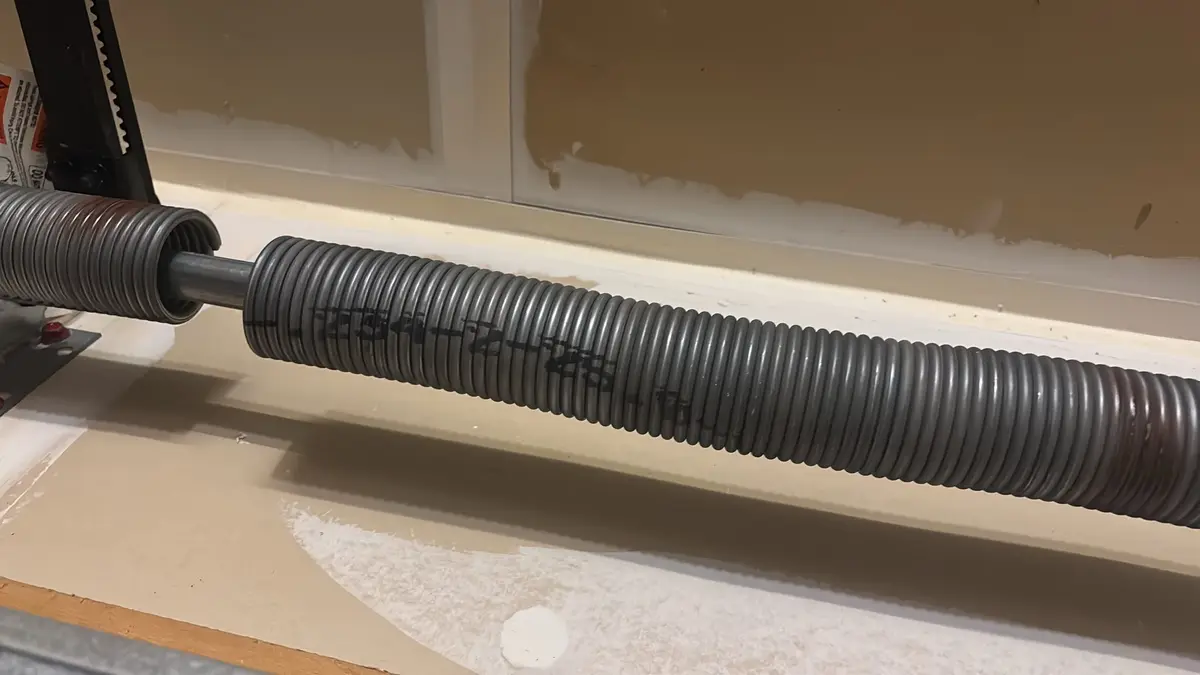
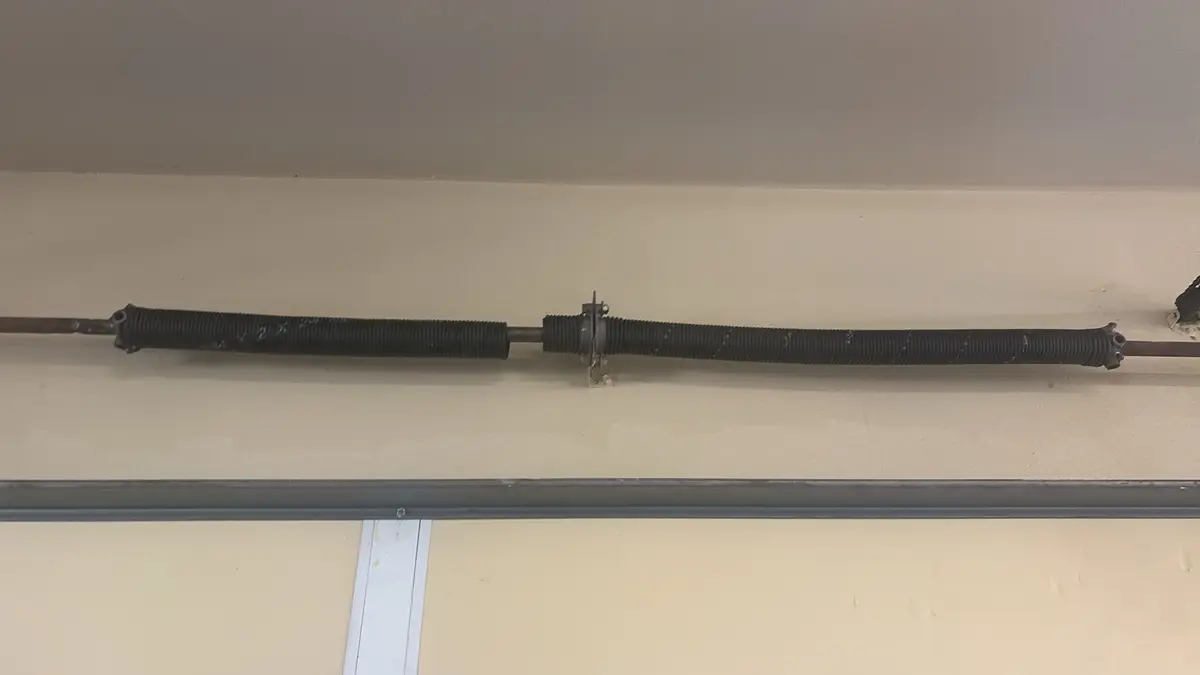
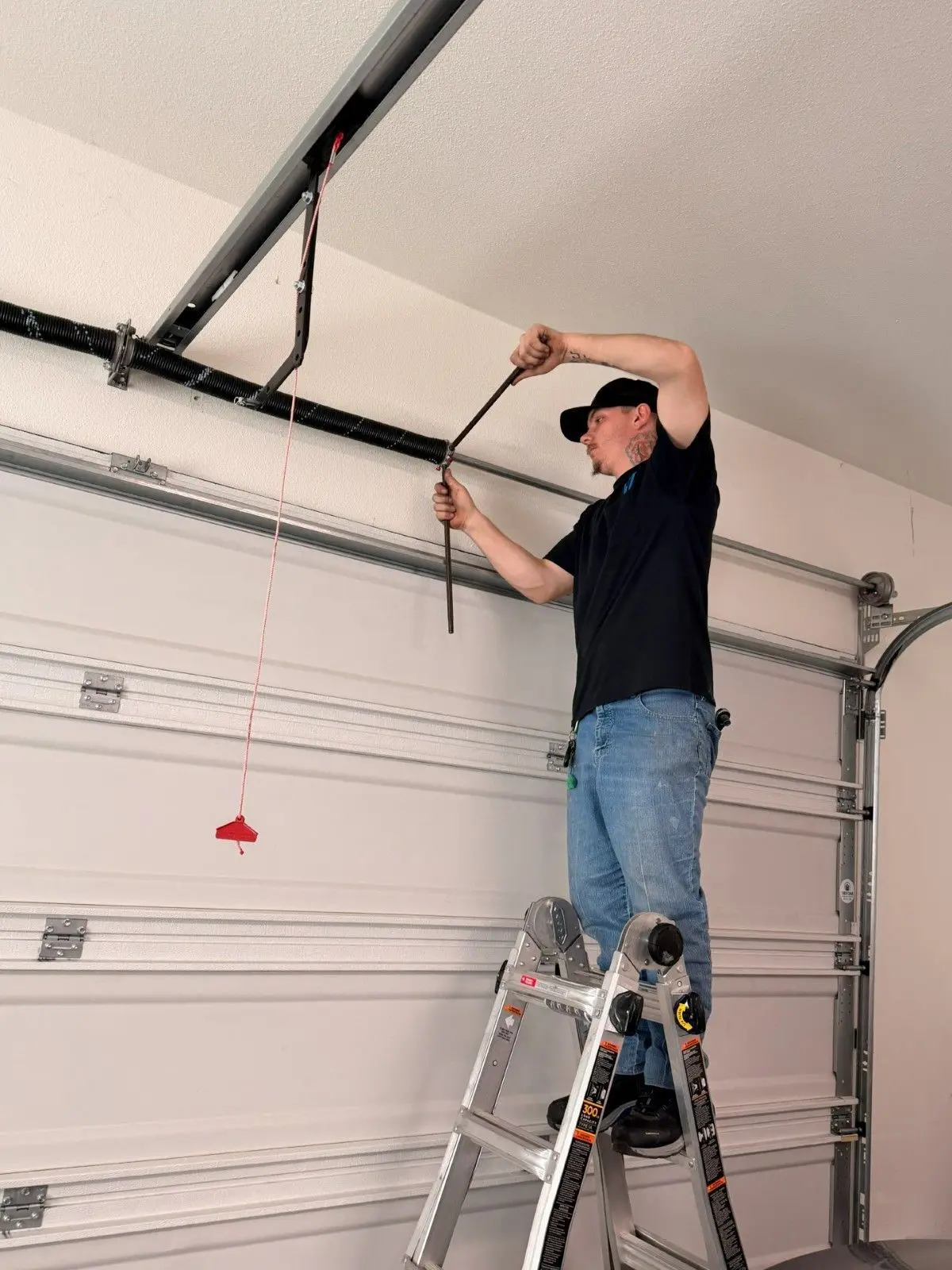
What the springs on your garage door do
Most garage doors use a torsion spring system: one or two tightly wound springs on a steel shaft above the garage door. The springs hold the tension that lifts the garage door. As it opens, the springs unwind and turn the shaft, and a cable at each side pulls the garage door up.
The springs do the heavy lifting, not the opener. A garage door often weighs more than 150 pounds, and the springs balance that weight so it feels light. The opener is an automatic assist. It moves a balanced garage door so you don’t have to lift it by hand.
Why you shouldn’t use the opener with a broken spring
When a spring breaks, nothing is carrying the weight. The garage door is too heavy for you to lift, and too heavy for the opener. Pressing the button again and again forces the opener to pull the full weight, which can strip its gears or burn out its motor. Then you need a new opener as well as new springs.
If you heard a loud bang and the garage door won’t open, leave the opener alone and call us at (512) 273-3798. Replacing the springs first is the less expensive repair.
Why springs break
Every time the door goes up and down, the spring winds and unwinds, and eventually the steel fatigues and snaps. Spring life is measured in cycles; a standard residential torsion spring is commonly rated for around 10,000 open and close cycles. A household that uses the garage as its front door can reach that in well under ten years.
Rust shortens that life, and so does a spring that was undersized for the door in the first place. Springs often break on a cold morning or right after the door has been sitting closed, when the steel is under full tension.
Torsion and extension springs
Torsion springs sit on a steel shaft above the door and twist to store energy. They are the standard on most modern doors, and they give smoother, more controlled movement.
Extension springs run along the horizontal tracks on each side and stretch as the door closes. They are found on older and lighter doors. Extension springs should always have a safety cable running through them so a broken spring cannot whip across the garage.
We replace both types. If your door has two springs and one has broken, we recommend replacing both: they were installed together and have the same number of cycles on them, so the second is usually close behind.
What a spring replacement includes
- Weighing or measuring the door so the new springs match it
- Removing the broken spring and installing the correct replacement
- Inspecting cables, drums, center bearing and end bearings, which wear alongside the springs
- Balancing the door so it stays in place when stopped halfway
- Lubricating moving parts and testing the opener’s safety reversal
Standard and high cycle springs
Springs are sold by cycle rating, where one cycle is the door opening and closing once.
| Spring rating | Roughly how long it lasts at four uses a day |
|---|---|
| 10,000 cycles (standard) | About 6 to 7 years |
| 20,000 cycles | About 13 to 14 years |
| 50,000 cycles | More than 30 years |
| 100,000 cycles | Effectively the life of the door |
Count how often your household actually uses the door. A family that opens it eight times a day goes through a standard spring in about three and a half years. For those homes a high cycle spring costs more on the day and far less per year of use.
Converting extension springs to torsion
If your door still runs on extension springs along the tracks, the next spring replacement is the right time to consider converting to a torsion system. A torsion spring sits on a shaft above the door, lifts more evenly, has fewer moving parts and stays on its shaft if it breaks. The conversion needs a few inches of clear space above the door, which we check before recommending it.
Making springs last longer
Twice a year, spray the coils lightly with a silicone or lithium garage door lubricant and wipe off the excess. It reduces friction between the coils and slows rust. Avoid general purpose penetrating oil, which is a solvent and strips lubricant away. Central Texas summers are hard on springs, so do not skip the one before the hot season.
Garage door spring replacement cost in Austin
Most spring replacements in the Austin area fall in these ranges, with parts and labor included:
| Service | Typical price |
|---|---|
| Basic spring replacement, single spring | $400–$650 |
| Basic spring replacement, double | $650–$950 |
| High cycle spring upgrade | adds $100–$250 per spring |
| Emergency or after hours visit | adds about $50–$120 |
Where your door lands in the range depends on its size and weight and the spring type. High cycle springs cost more per spring up front and last considerably longer, which usually makes them the better value for a busy household. Springs carry a warranty of 1 year to lifetime, depending on the spring you choose; the technician explains the warranty for each option before you decide. You get the exact price in writing before any work begins.
Why spring replacement is not a DIY job
A wound torsion spring holds enough energy to lift a door weighing several hundred pounds. Winding and unwinding it requires proper winding bars, the correct spring for the door, and a specific sequence of steps. Injuries from spring work are serious and well documented. This is the one garage door repair we strongly advise every homeowner to leave to a professional.
What to expect from a Tier One visit
Call or send a request
Tell us what the door is doing. We’ll give you the earliest time we can be there.
We diagnose the problem
The technician inspects the whole door system, not only the part that failed.
You approve the price
You get a clear explanation and the price before any work begins.
We repair and test
The door is repaired, balanced and safety tested before we leave.
 Garage Door Spring Repair FAQs
How much does garage door spring replacement cost in Austin?
Basic spring replacement costs $400–$650 for a single spring and $650–$950 for a double, parts and labor included. High cycle springs add $100–$250 per spring. Emergency or after hours service adds about $50–$120. You get the exact price in writing before work begins.
Can I open my garage door with a broken spring?
It is not recommended. Without the spring, you are lifting the full weight of the door, and the opener is not designed to do that. Forcing it can burn out the opener or bend the top panel. If you must get a car out, call us first and we will walk you through whether it is safe.
How long does spring replacement take?
Most residential spring replacements take about an hour once the technician is on site, including balancing and testing the door.
Should both springs be replaced at the same time?
Yes, in most cases. Springs installed together wear at the same rate. Replacing only the broken one leaves an old spring paired with a new one, which makes the door harder to balance and usually leads to a second service call.
Do your springs come with a warranty?
Yes. Our warranties range from 1 year to lifetime, depending on the spring you choose. The technician explains the warranty for each option before you decide.
What is a high cycle spring, and is it worth it?
A high cycle spring is built to last 20,000, 50,000 or 100,000 open and close cycles, against about 10,000 for a standard spring. It adds $100–$250 per spring. For households that use the door more than four or five times a day, it is usually the better value.
How long will new springs last?
It depends on the spring’s cycle rating and how often you use the door. If your household opens the door many times a day, ask us about higher cycle springs, which are built to last longer under heavy use.